Posts tagged Georgia
FAIR: Returnee Voices Matter: Towards More Inclusive Return Policies

April 2025

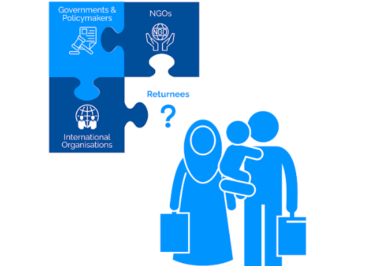
Policies are often not adapted to the needs of returnees, resulting in extreme exclusion, stigma and poverty as well as inefficiencies in terms of migration management. Not only are they not inclusive nor adapted, but policies often silence returnees, as shown in our research. Yet, if policies and practices are not improved to address these gaps, people will be pushed to migrate again as a coping mechanism, even when they are willing to reintegrate. Furthermore, the act of not being heard in return policies reduces the attractiveness of voluntary return.

The research conducted in Georgia, Iraq, Nigeria and Türkiye highlights three core arguments:

▪ Different types of narratives impact on the legitimacy of migration and return policies, which are typically disconnected from returnees’ experiences.

▪ The disconnect demonstrates the frequent silencing of returnees which further nurtures their invisibilisation and dehumanisation in dominant discourses.

▪ Alternative discourses can contribute to more inclusive and effective return policies.

The research findings underscore that it is possible to do things differently: Discourses that emerge from countries of origin, which are not centred around European perspectives and agendas, and which are shared by returnees themselves can be the foundation for more inclusive and effective return policies.

Download the Policy brief here.

Read More
IOM: Health and Reintegration - Returning to Space but not to Time: A Life Course Approach to Migrants’ Health, Continuity of Care and Impact on Reintegration Outcomes

January 2023

Samuel Hall in partnership with  EU- IOM Knowledge Management Hub and the African Centre for Migration and Society at the University of the Witwatersrand in South Africa funded by the European Union conducted a study to explore the links between health needs, access to care and sustainable reintegration of returnees. The study followed a mixed methods approach, conducted between March and July 2022, in six selected countries (Brazil, Ethiopia, the Gambia, Georgia, Pakistan and Senegal). 

There is an urgent need to build a continuum of care across different stages of the migration cycle while also funding gender specific initiatives on return and reintegration. The full report provides an analysis of the health needs of returnees and its impact on reintegration outcomes and further recommendations based on the mixed methods study.

Download Executive Summary Here

Download Full Report Here

Listen to the ‘Approaching health for returnees with an "integrated care" model’ episode on the Exploring Migrant Reintegration Podcast

Read More
IOM - Development of a Monitoring Toolkit and Review of Good Practices for the Sustainable Reintegration of Child Returnees

August 2021

This study was commissioned in the framework of the EU–IOM Knowledge Management Hub under the “Pilot Action on Voluntary Return and Sustainable, Community-Based Reintegration” project, funded by the European Union and implemented by IOM. The two recognized that while understanding of and evidence around the sustainable reintegration of adults has been growing, the same is not true for children – despite the fact that children are returning, alone or with families, to the very same reintegration contexts. Building on a monitoring approach for adult returnees developed in a 2017 Samuel Hall – IOM research project, this study addresses the information gap around children’s reintegration experiences.

Download Executive Summary

Download Report

Download Toolkit

Read More