
FAIR: Returnee Voices Matter: Towards More Inclusive Return Policies
April 2025
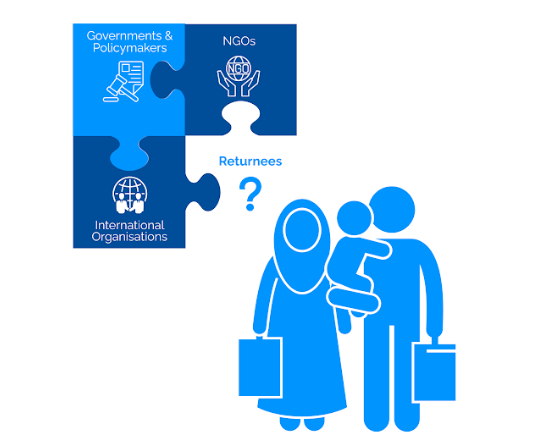
Policies are often not adapted to the needs of returnees, resulting in extreme exclusion, stigma and poverty as well as inefficiencies in terms of migration management. Not only are they not inclusive nor adapted, but policies often silence returnees, as shown in our research. Yet, if policies and practices are not improved to address these gaps, people will be pushed to migrate again as a coping mechanism, even when they are willing to reintegrate. Furthermore, the act of not being heard in return policies reduces the attractiveness of voluntary return.
The research conducted in Georgia, Iraq, Nigeria and Türkiye highlights three core arguments:
▪ Different types of narratives impact on the legitimacy of migration and return policies, which are typically disconnected from returnees’ experiences.
▪ The disconnect demonstrates the frequent silencing of returnees which further nurtures their invisibilisation and dehumanisation in dominant discourses.
▪ Alternative discourses can contribute to more inclusive and effective return policies.
The research findings underscore that it is possible to do things differently: Discourses that emerge from countries of origin, which are not centred around European perspectives and agendas, and which are shared by returnees themselves can be the foundation for more inclusive and effective return policies.
Download the Policy brief here